Greater one-horned rhinoceros
Rhinoceros unicornis
The largest of the Asian rhinos, and the one conservation success story among the three: reduced to a few hundred animals a century ago, it now numbers over four thousand in the floodplain grasslands of India and Nepal.
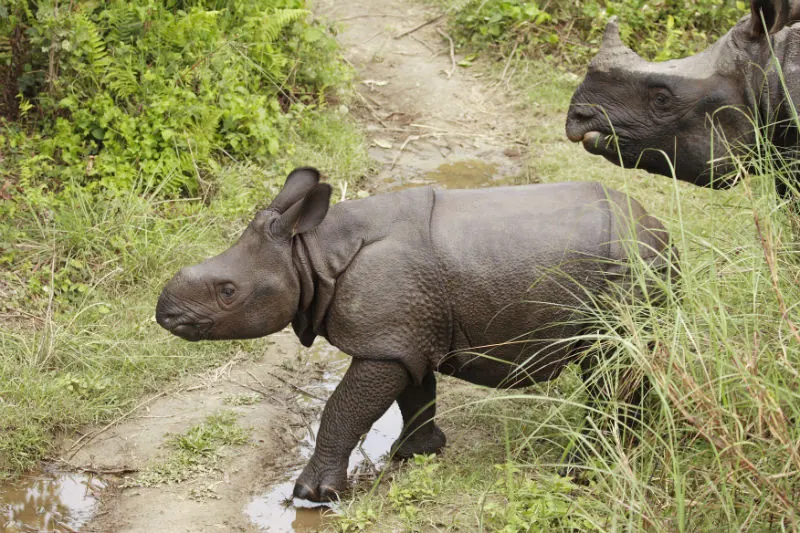
Photograph: A. Christy Williams
4,075
Population estimate
Vulnerable
IUCN Red List status
2025
Estimate date
India, Nepal
Range countries
Appearance
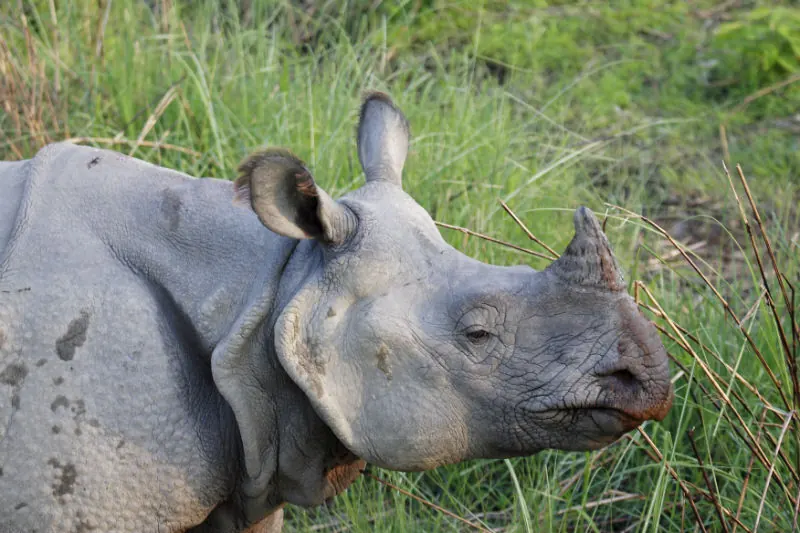
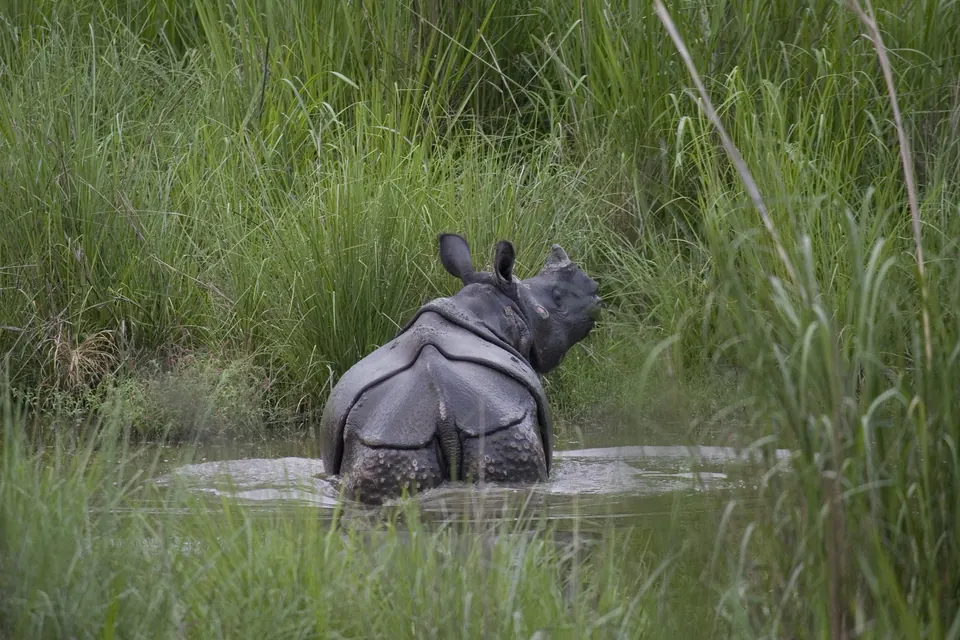
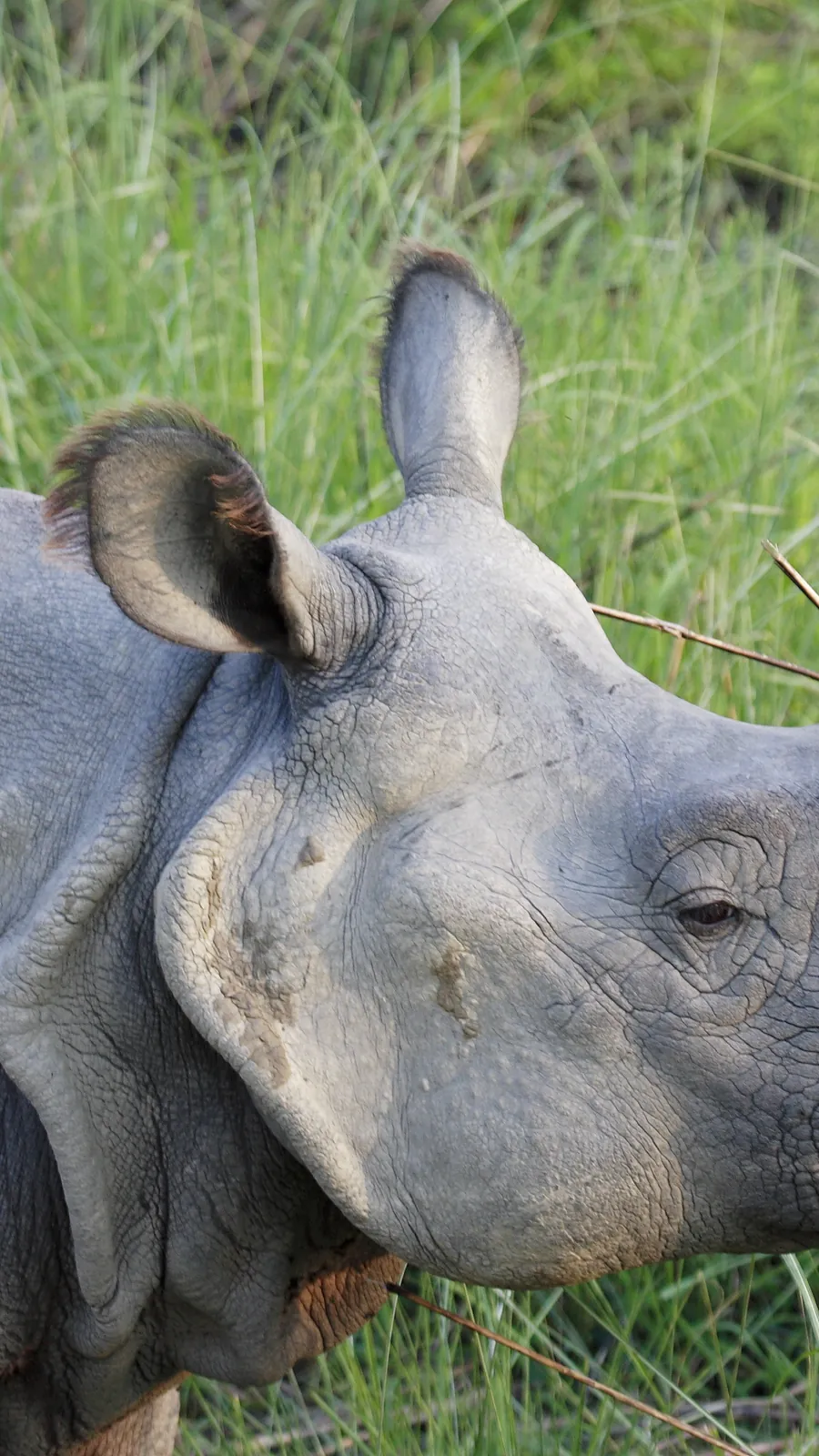
The greater one-horned rhinoceros is the largest of the three Asian species and among the biggest land mammals in Asia. Large males can approach 2,200 kg and stand up to two metres at the shoulder. Both sexes carry a single horn, typically 20–60 cm long and, like all rhino horn, made of compacted keratin rather than bone.
Its most distinctive feature is its hide. Deep folds at the neck, shoulder and rump give the animal a plated, armoured look, and the skin between the folds is studded with rounded tubercles that resemble rivets. This combination of a single horn, heavy folds and tubercled skin separates it in the field from the Javan rhinoceros, whose hide instead carries a mosaic of polygonal segments and whose females are usually hornless or nearly so.
Behaviour and ecology
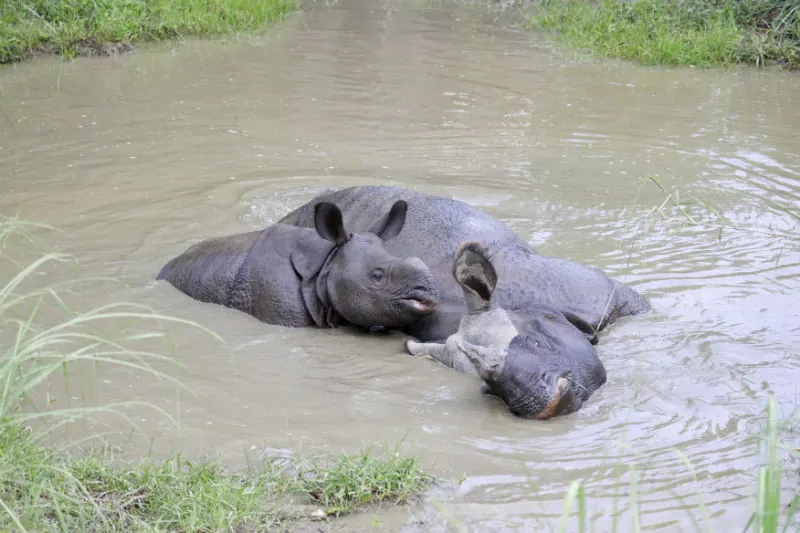
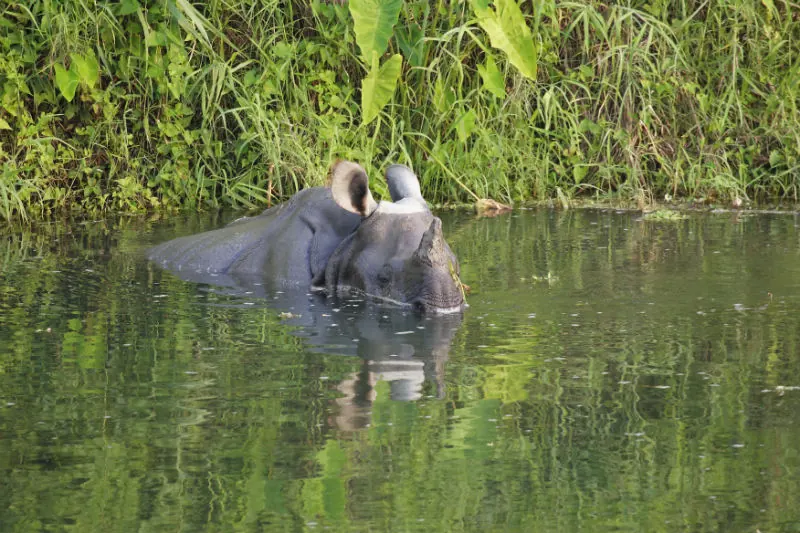
This is primarily a grazer of alluvial grassland, feeding on grasses and supplementing them with browse, aquatic plants and, where parks adjoin farmland, agricultural crops. It is strongly associated with water: an accomplished swimmer, it crosses rivers readily and wallows through the heat of the day.
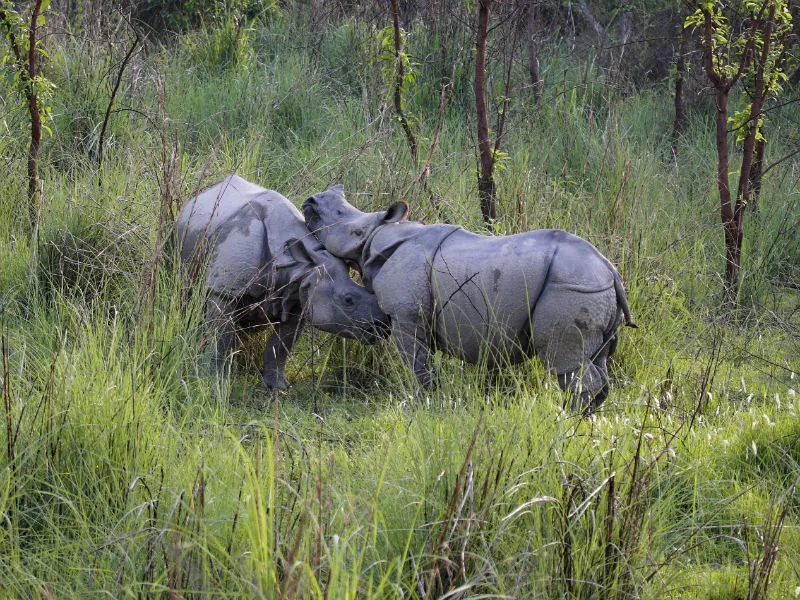
Adults are largely solitary, though animals tolerate one another at wallows and on productive grazing lawns, and dominant males maintain loose ranges. The stable social unit is a female with her calf. Gestation lasts around 15–16 months, a single calf is born, and the interval between calves is typically about three years — a slow reproductive rate that makes population recovery a matter of decades rather than years. Communal dung piles serve as a shared channel for scent communication.
Threats
Poaching for horn remains the most immediate threat. It drove the species close to extinction in the nineteenth and early twentieth centuries and, though sustained protection has reduced it substantially at the main sites, demand persists.
Habitat loss and conversion. Alluvial floodplain grassland is among the most productive land in the region, and the pressure to convert it to agriculture and settlement is constant. Remaining habitat is fragmented and largely confined to protected areas.
Concentration in very few sites. A high proportion of the world population lives in a small number of parks. That concentration is the direct product of successful protection, but it also means a single catastrophic event — an epidemic, an extreme flood, a breakdown in security — could remove a large share of the species at once.
Flooding and climate. Annual flooding is part of the ecology of these grasslands, but severe events cause direct mortality and displace animals beyond park boundaries, where they are exposed to conflict with people and to poaching.
Invasive plants and habitat degradation progressively reduce the extent and quality of the grasslands the species depends on.
Conservation status and trend
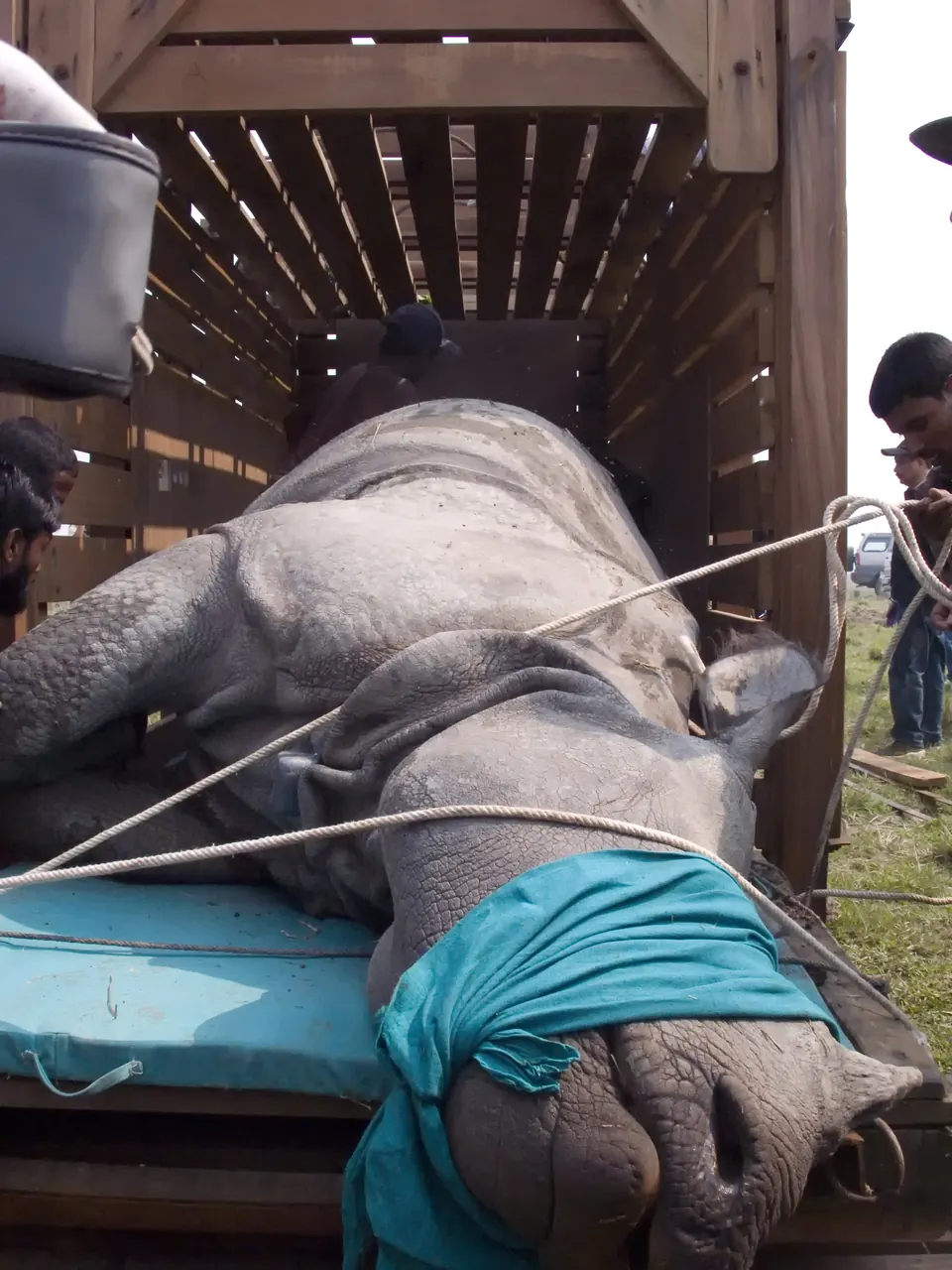
The greater one-horned rhinoceros is the only Asian rhino whose numbers are rising. Reduced to perhaps a few hundred animals by the early twentieth century, it stood at 4,075 in the 2025 global estimate — up from 4,014 in 2022. The recovery rests on decades of sustained protection at a small number of core sites in India and Nepal, and on a deliberate programme of translocation to re-establish the species in parks within its former range.
The species nevertheless remains Vulnerable. Its range is a fraction of its historical extent, its habitat is fragmented, and a large share of the world population sits in very few places. Recovery has been real, but it is not yet secure.
Current AsRSG priorities
The Greater One-Horned Rhino Conservation Planning working group convened its introductory planning meeting on 11 May 2026. Current priorities include:
- Consolidating protection at the established strongholds, on which the species’ recovery to date depends.
- Extending the species into additional secure sites within its former range, to reduce the risk carried by concentration in a few parks.
- Scoping a climate work-stream, given the exposure of floodplain habitat to changing flood regimes.
References
Range
Present in India, Nepal.
From the field